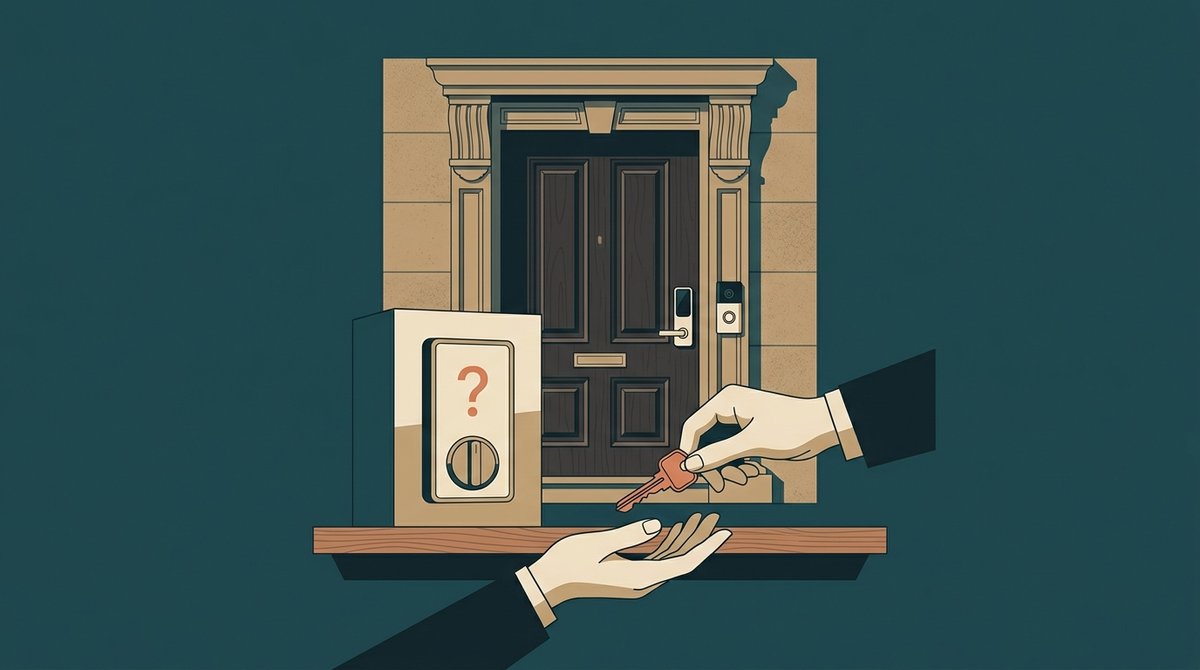
Apple has spent more than a decade trying to make its smart home platform happen on its own terms. Now its big comeback is wearing someone else's name tag.
Bloomberg reported this week that Apple has co-developed a lineup of connected devices that LG will sell: a wired video doorbell, a thermostat, a smart deadbolt, and indoor, outdoor and floodlight cameras. Apple helped shape the design, features and engineering. LG will manufacture them, put its name on the box and handle support. Neither company has commented.
The timing is notable. Apple reportedly plans to introduce its own hardware on Oct. 13, including a new home hub with a display, a refreshed HomePod mini and a new Apple TV. The LG devices aren't expected to reach consumers for at least a few more months.
Why it's hard not to read this as a data grab
A doorbell sees who comes and goes. A thermostat can tell when the house is empty. A lock knows when you get home. Cameras see rooms you'd never invite a stranger into. These are the most intimate devices in a house.
Apple built its home pitch on privacy. LG, like most TV makers, runs an advertising business fueled in part by viewing data. LG says that tracking is off by default and requires the viewer's consent. Its TVs still spent September under scrutiny after researchers raised questions about what they collect and how securely. LG disputes the findings.
None of that tells us what LG will do with what these devices collect. But it's a very different data business from the one Apple has spent years assuring customers it doesn't run.
The account ownership problem
Apple may have helped shape the hardware and software experience, but a device is more than its design. LG will manufacture it, put its name on it and handle support. What we don't know yet is where the software and data responsibilities divide: whether you'll need an LG account, which cloud stores your camera footage, and if everything can stay inside Apple's Home app. Those answers decide whose rules your front door follows.
Until the companies respond, the uncertainty is going to matter.
Why Apple is doing it anyway
So why would a company that sells privacy hand its front door to someone else? Because HomeKit launched in 2014 and never achieved the reach of Amazon Alexa or Google Home. This is Apple's most serious attempt to change that, and it's borrowing a playbook it has used with Belkin and Logitech: work behind the scenes on products sold under someone else's brand, let the partner manufacture and support them, and fill out the ecosystem fast.
For LG, it's a big step. The lineup marks its first outdoor camera, doorbell and thermostat in recent years, and the company's debut smart lock outside South Korea.
And this may only be the start. Bloomberg reports Apple is also planning a privacy-focused monitoring device of its own, a version of its hub with the screen on a robotic arm, and an in-home security service. Read together, the strategy looks clear: get Apple hardware into the house, fill the gaps with partners, and potentially build a subscription on top.
Apple isn't outsourcing all of its home security, either. Its own monitoring device is reportedly designed to sense which room someone is in without recording video. The LG-branded lineup handles the more conventional cameras, doorbell and lock.
The upside
There are real positives here too.
An easier way in. For many households, smart home still means a pile of apps and devices that don't talk to each other. If Apple's involvement brings the setup and integration its own products are known for, these could make a fragmented category much easier to live with.
Open standards. Regulatory filings show several of the devices supporting Matter and Thread, which Apple has embraced alongside Google, Amazon and others. Matter is designed to work across platforms and can enable local control. How much these products can do without LG's app or cloud won't be clear until they ship.
A bigger user base. Apple getting serious brings millions of iPhone households into the smart home, and wider Matter adoption makes everything work better together, whatever brand you buy.
Genuinely useful features. The deadbolt supports ultra-wideband for proximity-based automatic unlocking, the kind of polish smart locks have needed for years.
What I'd do
If a doorbell, lock or camera is on your list, wait a few months and see what ships. When it does, ask the questions that matter more than the logo: what works without the cloud, where recordings are stored, whether you can use it with no LG account, and who controls the product five years from now. For any device or any integrator, including us, the test is the same: is the dependency chosen, visible, replaceable and recoverable?
Apple getting serious about the home is good news. Just make sure that when the house is finished, it answers to you.
RyzaLab's Smart Home Blueprint is a 60-minute assessment of your space, devices, routines and priorities. It ends in a written plan covering what to automate, what hardware to buy, what to skip and who to call. Book Your Blueprint.
Source notes
- Bloomberg via Yahoo Finance/Stocktwits, "Apple Reportedly Partners With LG Electronics To Enter Smart Home Device Market," Oct. 6, 2026. Stocktwits · Bloomberg
- MacRumors, on LG's FCC filings: device lineup, Matter/Thread support, UWB lock. MacRumors
- Bloomberg via 9to5Mac, on Apple's planned monitoring device, robotic-arm hub and security service. 9to5Mac
- Free Press Journal, on Apple's room-sensing monitoring device. Free Press Journal
- Bloomberg (Mark Gurman) on Apple's Oct. 13 plans and home hub, Sept. 30, 2026; via Reuters. Reuters, via The Star
- Gamers Nexus with Level1Techs, LG webOS TV investigation, Sept. 7, 2026; LG's response via Ars Technica and Tom's Hardware. Gamers Nexus video · Ars Technica · Tom's Hardware
- LG and LG Ad Solutions privacy and data policies. LG: Understanding privacy on LG smart TVs · LG Privacy Center · LG Ad Solutions privacy policy
- Texas Attorney General, on LG's agreement to stop using automated content recognition to collect viewing data without informed consent, May 11, 2026. Texas Attorney General
- Apple Newsroom, In the Loop, "Welcome home," Oct. 8, 2026: Apple has announced a "Welcome home" event for Oct. 13, where its long-rumored home hub is expected to debut. Apple Newsroom